Warum ist die Kontrolle über den Cashflow für Veranstalter so wichtig?
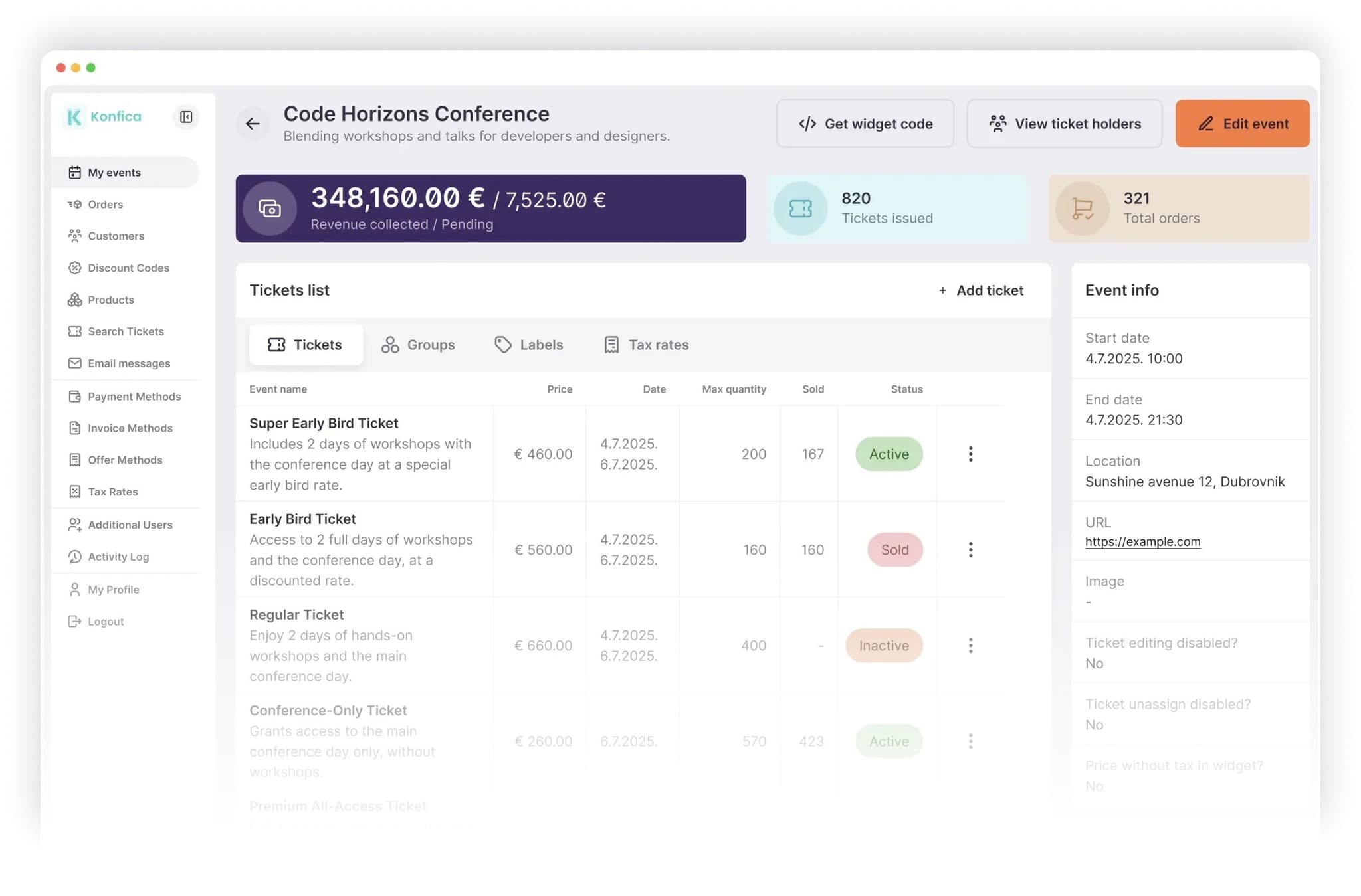
Organizing a professional event requires significant upfront investment long before the first attendee arrives. Venue deposits, speaker fees, marketing campaigns, production costs and staffing all need to be secured months in advance.
For many organizers, the biggest financial risk is not ticket sales but rather the lack of control over ticket revenue and its impact on event cash flow.
Understanding the distinction between ticket revenue and overall cash flow is crucial for maintaining financial stability in event management.
What Is Ticket Revenue in Event Management?
Ticket revenue refers to the income generated from ticket or registration sales for an event. In many ticketing marketplace models, this revenue is processed and temporarily held by the platform, with payouts scheduled weekly, monthly, or even after the event takes place.
While this may seem operationally convenient, delayed access to ticket revenue can significantly impact an organizer’s cash flow.
How Ticket Revenue Directly Impacts Event Cash Flow
Cash flow represents the movement of money in and out of a business. In event management, cash flow is particularly sensitive because expenses occur long before the event generates its full income potential.
When organizers do not have direct access to ticket revenue:
Vendor payments may require short-term financing
Marketing budgets may be limited
Production quality may be constrained
Financial forecasting becomes more complex
Even when ticket sales are strong, delayed payouts can create artificial liquidity pressure.
The Risk of Delayed Payouts from Ticketing Platforms
Some ticketing platforms operate on a marketplace or intermediary model. In these cases:
Ticket revenue is collected by the platform
Funds are held under platform terms
Payout timing is predefined
Organizers may have limited flexibility
For smaller or mid-sized conferences and festivals, this can restrict operational agility.
Delayed ticket revenue access may:
Reduce negotiating power with suppliers
Increase dependency on external financing
Create uncertainty during critical planning phases
Ultimately, while revenue volume is important for cash flow management, revenue timing plays a critical role too.
Marketplace Models vs. Direct Revenue Models
In marketplace ticketing models, the platform acts as an intermediary between the organizer and the buyer. While this can simplify distribution, it often limits financial flexibility.
In direct or white-label ticketing models, organizers retain operational control over ticket revenue flows. This structural difference has a significant impact on event cash flow stability.
Why Owning Ticket Revenue Improves Financial Stability
When organizers control their ticket revenue directly, they gain:
Immediate visibility over incoming funds
Greater flexibility in allocating budgets
Improved financial planning
Reduced dependency on third-party payout schedules
Direct ticket revenue control strengthens event cash flow and supports long-term financial stability.
It also enables organizers to invest more confidently in:
Marketing campaigns
Speaker or performer agreements
On-site production quality
Technology and attendee experience
Financial control is not about maximizing short-term gains - it is about protecting the sustainability of the event.
Ticket Revenue Control as a Strategic Advantage
For professional conferences and multi-day events, ticket revenue often represents the primary source of income. Having structured access to that revenue allows organizers to operate with:
Transparency
Predictability
Financial resilience
Over time, this builds a stronger operational model and reduces risk exposure.
How Konfica Supports Direct Ticket Revenue Control
Konfica is designed as a white-label event ticketing and participant registration platform that allows organizers to maintain control over ticket revenue and attendee data.
Instead of functioning as a marketplace intermediary, Konfica enables:
Direct integration into the organizer’s website
Structured access to revenue flows
Full ownership of participant information
This approach supports healthier event cash flow management while preserving brand identity and operational independence.
Frequently Asked Questions
What happens when ticket revenue is delayed?
When ticket revenue is delayed by a ticketing platform, organizers may face liquidity pressure. Upfront expenses such as venue deposits, marketing and production costs must often be paid before the event takes place. Without timely access to funds, financial planning becomes more difficult.
Why is ticket revenue control important for event cash flow?
Ticket revenue control is important because cash flow depends not only on how much money is earned, but also when it becomes available. Direct access to ticket income allows organizers to manage expenses, forecast budgets and reduce financial risk.
Does controlling ticket revenue reduce financial risk?
Yes. Controlling ticket revenue reduces dependency on third-party payout schedules and improves financial predictability. This helps organizers avoid short-term financing gaps and strengthens long-term event stability.
How does ticket payout timing affect event planning?
Ticket payout timing affects an organizer’s ability to pay vendors, secure suppliers and invest in marketing. Faster access to revenue increases operational flexibility and reduces financial uncertainty during planning.
Take Control of Your Event Cash Flow
If maintaining direct access to ticket revenue is critical for your event strategy, explore how Konfica’s white-label ticketing model supports financial stability and operational independence.

